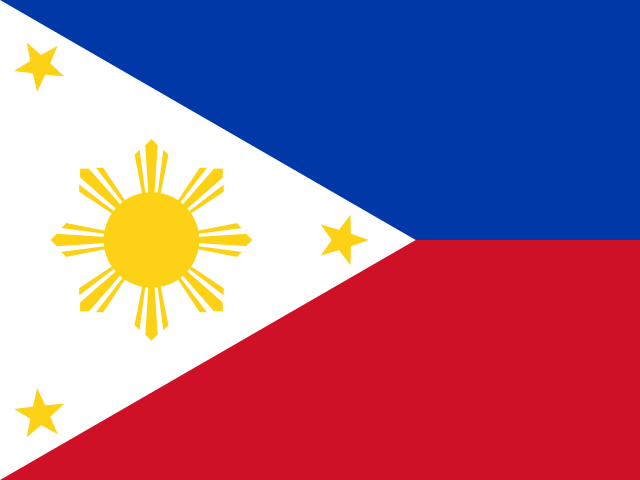
Philippines
English-speaking, affordable, American-influenced
The Philippines offers a unique combination: universal English proficiency, American cultural influence, and costs even lower than Thailand. The SRRV retirement visa remains one of the most accessible long-term residence programs in Asia, and a new digital nomad visa is launching.

Our framework evaluates Philippines across 6 strategic pillars. Each pillar answers a key question that matters when planning your relocation strategy.
Profile Weight Distribution
How we score: Six strategic pillars with weighted sub-factors. Confidence indicators show data quality (●●● = verified, ●●○ = researched, ●○○ = editorial). Read our full methodology
Profile weighting: Different expat profiles prioritize different pillars. Select your profile above to see personalized rankings.
Something off? These scores improve with feedback. Help us get it right
Immigration Overview
The Philippines sits in a sweet spot that no other Southeast Asian country quite matches: everyone speaks English. Not tourist-area English, but actual fluent English as a second language across the entire country. For American expats especially, the cultural familiarity is striking. Same fast food chains, same shopping malls, same general vibe but at a fraction of the cost.
Manila is chaotic but has a growing business district in Makati and BGC. Cebu offers a more manageable urban experience with easy access to beaches. Davao is the cleanest, safest city many visitors have ever seen. The archipelago's 7,000+ islands means endless options for finding your spot.
The SRRV (Special Resident Retiree Visa) has been the traditional pathway, available from age 35 with a modest deposit. A digital nomad visa is in development, which would add another option for remote workers.
Visa & Residency Pathways
SRRV (Retiree Visa)
Long-running program, available from age 35
- SRRV Classic: $10k-20k deposit (refundable)
- SRRV Smile: $20k deposit (age 35+)
- Permanent residence status
- Multiple entry, no exit clearance
- Work permit can be added
Digital Nomad Visa (Launching)
New program in development
- Expected to require $60k+ annual income
- For remote workers with foreign employers
- 1-2 year duration expected
- Details still being finalized
- Check back for updates
SIRV (Investor Visa)
For those investing in Philippine business
- $75,000 minimum investment
- In stocks or active business
- Permanent residence status
- Work authorization included
- Family members eligible
Tourist Visa + Extensions
The flexible but temporary option
- Visa-free 30 days (many countries)
- Extendable month-by-month
- Can stay up to 36 months on extensions
- No work authorization
- Exit clearance required after 6 months
Why Philippines?
Universal English
English is co-official. Everyone speaks it fluently. Call centers, BPOs, customer service industries all based on English proficiency.
Extremely Affordable
$1,000-1,600/month for comfortable living. Modern condo $300-500. Domestic help $200/month. One of Asia's cheapest.
American Familiarity
Former US colony. Same brands, same food chains, similar cultural references. Easy transition for Americans.
7,000+ Islands
Endless beach and island options. Palawan consistently rated world's best island. Siargao for surfing. Boracay for parties.
Warm Culture
Filipinos are famously hospitable. Easy to make friends, build community. Dating scene straightforward for Western men.
US Time Zone Friendly
12-hour offset from US East Coast means overlapping evening hours. Better for US-based remote work than Europe.
General Requirements
Common requirements for Philippines long-term visas:
- Valid passport with 6+ months validity
- NBI clearance (criminal check) from Philippines
- Medical exam at accredited clinic
- Proof of funds/income
- Bank deposit (for SRRV)
- Multiple passport photos
The Philippines has generous tourist visa extension policies, allowing stays up to 36 months on rolling extensions. This gives flexibility to try the country before committing to SRRV or other long-term options.
Ready to explore Philippines?
Join the private waitlist to get an invite window. We’re opening access in cohorts so each invite comes with momentum.
Free to start. Upgrade for document uploads and packet generation.